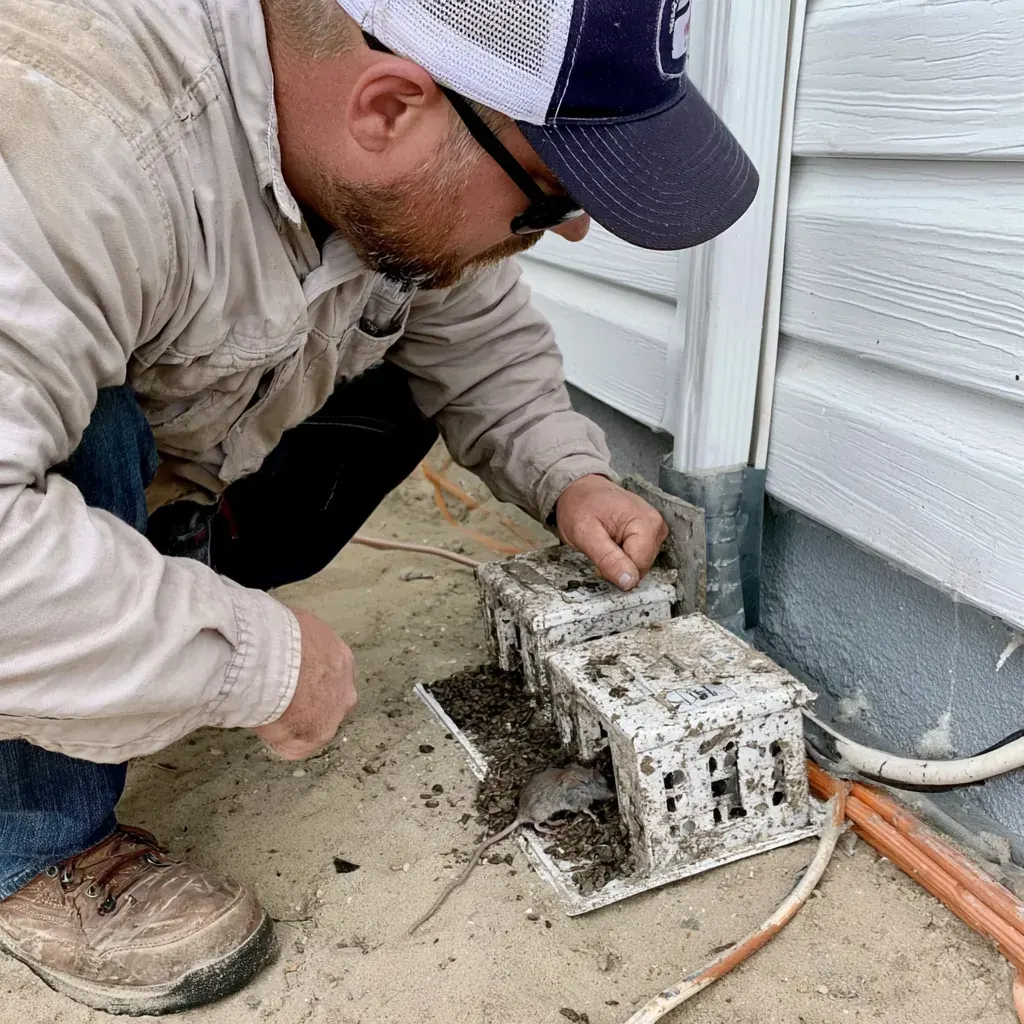
Sealing Gaps Can Limit Future Access
Kenosha landmarks such as Simmons Island Park and the Kenosha Public Museum help describe where a property is, but they do not indicate rodent activity there. A home still needs inspection for signs and entry gaps before a station’s location is chosen.
Near the Dinosaur Discovery Museum, as elsewhere in Kenosha, house entrances and small commercial service doors can differ in access and daily use. Those property details affect where a station can sit safely; the landmark itself says nothing about pest conditions.
A rodent-control question can come from a Kenosha residence or business, or from a property contact in another part of Kenosha County. Providers set their own boundaries; giving the property location lets you ask whether they serve that address.
Sealing Openings Into Buildings
- PURPOSE
- The enclosure gives compatible bait a defined place on the property; it does not block a rodent’s entry into a building.
- COMPATIBILITY
- Protecta branding and a model marking identify the housing, even when another secured station has a similar outline.
- PLACEMENT
- The bait has separate product directions that govern its permitted use, placement, and precautions.
- SERVICE CHECK
- The chosen position should reflect observed activity, site access, and how people and pets use the area.
- LABEL USE
- Product directions address where a particular station and bait may be used and what precautions apply; ask the provider to explain the planned setup.
- ENTRY GAPS
- Seasonal changes can alter access to outdoor stations as vegetation, stored items, or routine property use shifts around them. Seasonal shifts can alter rodent travel patterns, so activity may change even if station placement stays the same.
- ACCESS WORK
- an estimated $40–$50
Other Causes of Scratching Sounds
Other locked rodent bait stations can look similar because they also use a secured housing to hold bait. Branding and model markings identify the Protecta product, while the bait remains a separate item with its own label. Read the brand and model marking on the housing and compare it with the product information for that unit. The bait name appears on a separate package or service record. Ask the provider to identify both so you can distinguish the enclosure from its contents.
How Property Findings Shape Service Cost
The licensed pros we connect you with can also ask whether recent changes in food storage, clutter, or access may have affected rodent movement. If a Protecta station fits the findings, the provider selects a compatible model and bait, then places the unit according to product directions and site access.
After placement, the provider can note each unit’s position and set out how checks will be handled. Follow-up at a Kenosha home or small commercial property can show whether activity continues, whether a station needs attention, and whether access gaps should also be addressed.
One appointment may be enough when inspection locates a limited route and the needed measures can be completed during the visit. Continued service has a clearer role when devices need checks, activity appears elsewhere, or entry gaps remain open; ask what each return visit would verify.
DEVICE STATUS CHECKS WITH A SINGLE VISIT OR CONTINUED REVIEW
| Entry Routes |
Seal Entry Points |
|---|
| A narrow trail of recent rodent signs | Entry gap checks |
| Unresolved gaps allow renewed indoor access | Plan follow-up checks |
| Several gaps with recurring indoor rodent traces | Routes sealed; devices monitored |
FOLLOW-UP CHECKSThe supplied Wisconsin information names no Protecta-specific station code, so a brand name alone does not establish what work was done. Ask the invoice to distinguish station inspection from bait replenishment or device replacement; that record can show which part received attention and what may need follow-up at your property.
Gnaw Marks on Building Materials
An intact station does not close gaps around pipes, doors, or foundations, so rodents may still reach stored food or materials through open routes. Droppings and urine can carry germs; cleanup should avoid stirring dust. Sealing identified gaps addresses access, while the station itself cannot repair damage or remove contamination.
Clean Droppings Without Raising Dust
From a distance, note the station’s location, visible model marking, and whether its cover appears seated. Keep children and pets away, and do not open, move, or refill it. Look for fresh droppings or gnaw marks nearby, but leave them undisturbed.
Keeping Traps and Stations Accounted For
Rodents can also leave droppings or gnaw marks that signal activity around stored food. A closed, properly positioned station helps limit access, but it does not make bait harmless. Keep household members away as directed on the label. If a housing is open or bait is outside it, do not handle the material; contact the provider and follow the product’s safety instructions.
Start a Conversation About Rodent Fees
If the proposed work changes after service starts, ask how the pros we connect you with would explain an updated estimate before proceeding.For a Kenosha home near Simmons Island Park or Monument Square, a guide range is an initial estimate for inspection and the control steps discussed. It does not automatically include repairs, extra visits, or sealing; tell the pros we connect you with what you noticed, then confirm any visit charge and the exact agreed work before scheduling.See how property conditions shape rodent service costs in the pricing guide.