Estimate Body Size and Shape
Begin with the animal’s apparent body length, using a nearby object you already know for scale. A rat often looks longer and more solid through the torso; a mouse tends to appear compact and light. In Kenosha, a brief view from a doorway or across a room can distort those impressions, especially when the animal is moving. Record what you could actually see rather than filling gaps from memory. Do not approach or try to catch it for a closer comparison.
Next, compare the head, ears, feet, and tail as parts of the same outline. A rat generally has a thicker tail and heavier proportions, while a mouse often has a finer tail and more delicate features. Color is a weak clue because indoor light can change how fur looks. At a Kenosha house or a small commercial property, a fast glimpse may hide the details that separate the two, so treat your first impression as a working guess rather than a firm identification.
Use Droppings as a Size Clue
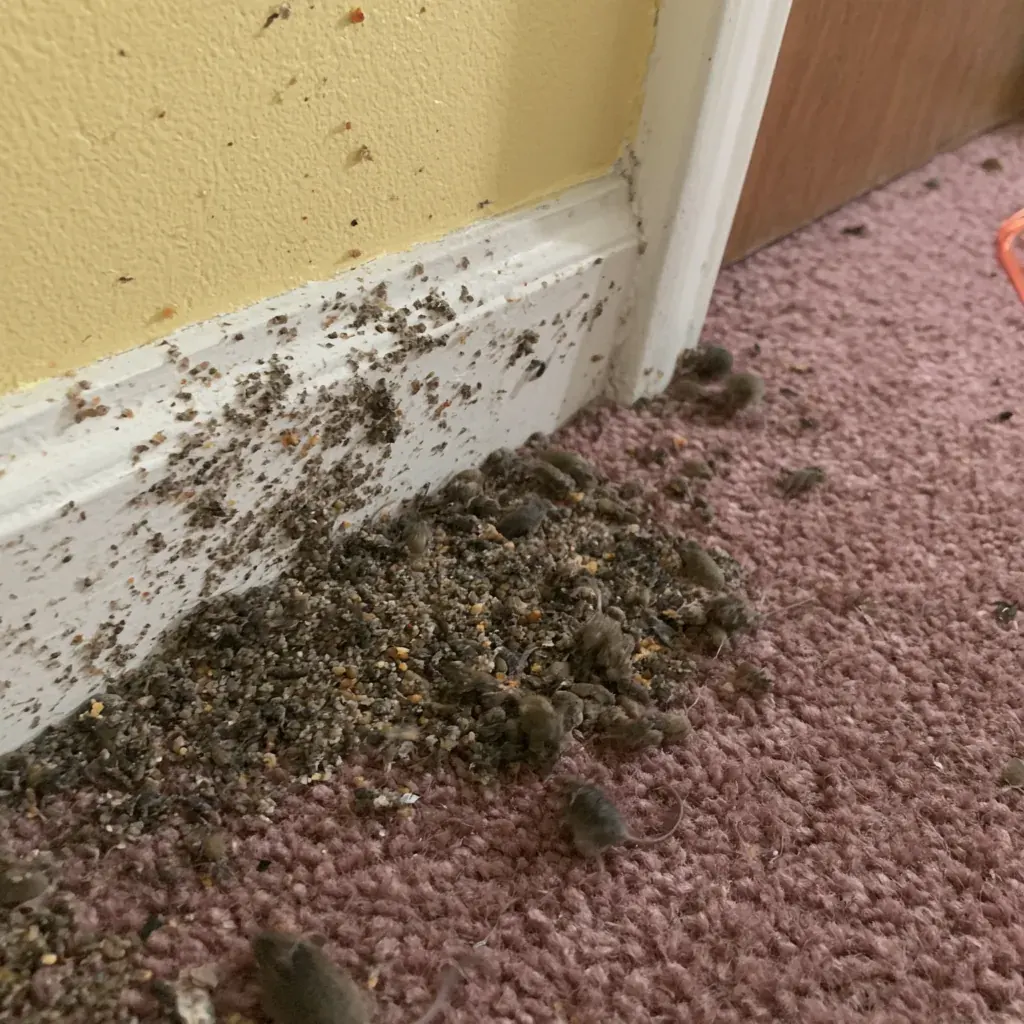
Droppings can add a size clue, but only compare them from a distance. Shape is another detail to note, and you can observe it without approaching or touching the droppings. Look at several pieces together if they are already visible, and note whether they seem similar in size. Do not pick them up or disturb the area. If you are unsure what the visible signs mean, tell the licensed pros we connect you with what you observed.
Where the evidence appears helps describe the setting, not name the species. Note whether it is beside a wall, near stored goods, or in a quiet part of the building, then compare that location with where you saw movement. A Kenosha home and a shop near Monument Square may have different layouts and sight lines, but the room itself cannot tell you whether the visitor was a rat or mouse. Keep location as context for an assessment, not as proof.
Read Gnawing and Sound Carefully
Gnawing can confirm that something has been working on a surface, while the mark alone rarely separates a rat from a mouse. Look for damaged packaging, wood, or other visible material without touching it, and note the item and its position. Nesting material may also show activity nearby, but its appearance is not a reliable size measurement. In Kenosha, describing exactly what you noticed gives the pros we connect you with a useful starting point for assessing the signs.
Sounds can help you place activity in time and space, though they are easy to misread. Write down whether you heard scratching or movement, the room, and the time; avoid opening walls or shifting stored items to investigate. A noise from above or behind a cabinet does not reveal body size or tail shape. If you are in Kenosha, compare that note with any separate sighting or visible evidence, and keep the clues distinct instead of treating one sound as an identification.
Combine Clues and Record Details
To identify rodents in a Kenosha home, start with build: rats have larger, heavier bodies and thicker tails, while mice look smaller and finer. Compare droppings; larger pieces point toward a rat, though size is hard to judge without a clear reference. Note gnawing or activity near food storage or along a wall. Listen for scratching inside walls or ceilings, and note the area, since sound can reveal activity that a brief sighting misses. Record what you saw and where before seeking an assessment.
Before seeking an assessment, write down the room, time, approximate scale, and features you could see, including the tail if it was visible. A Kenosha home, a property near Festival Park, or one by Reefpoint Marina may offer different views of the animal; those place names are context, not evidence of rodent activity. If you have a photo taken from where you already were, it may preserve details. The pros we connect you with can use your account to assess what remains uncertain.
Dealing with rodent activity in your home?
Start by noting where you saw activity, then ask what a visit would cover. In Kenosha, a home near North Beach and a small business by Monument Square may have different layouts, so the pros we connect you with need your address and a brief description before they can discuss fit. Ask whether your property is within their service area, what appointment timing is available, and whether the visit carries a charge. If you have noticed sounds or damage, describe where they occur; a site visit can help identify activity and possible entry routes.