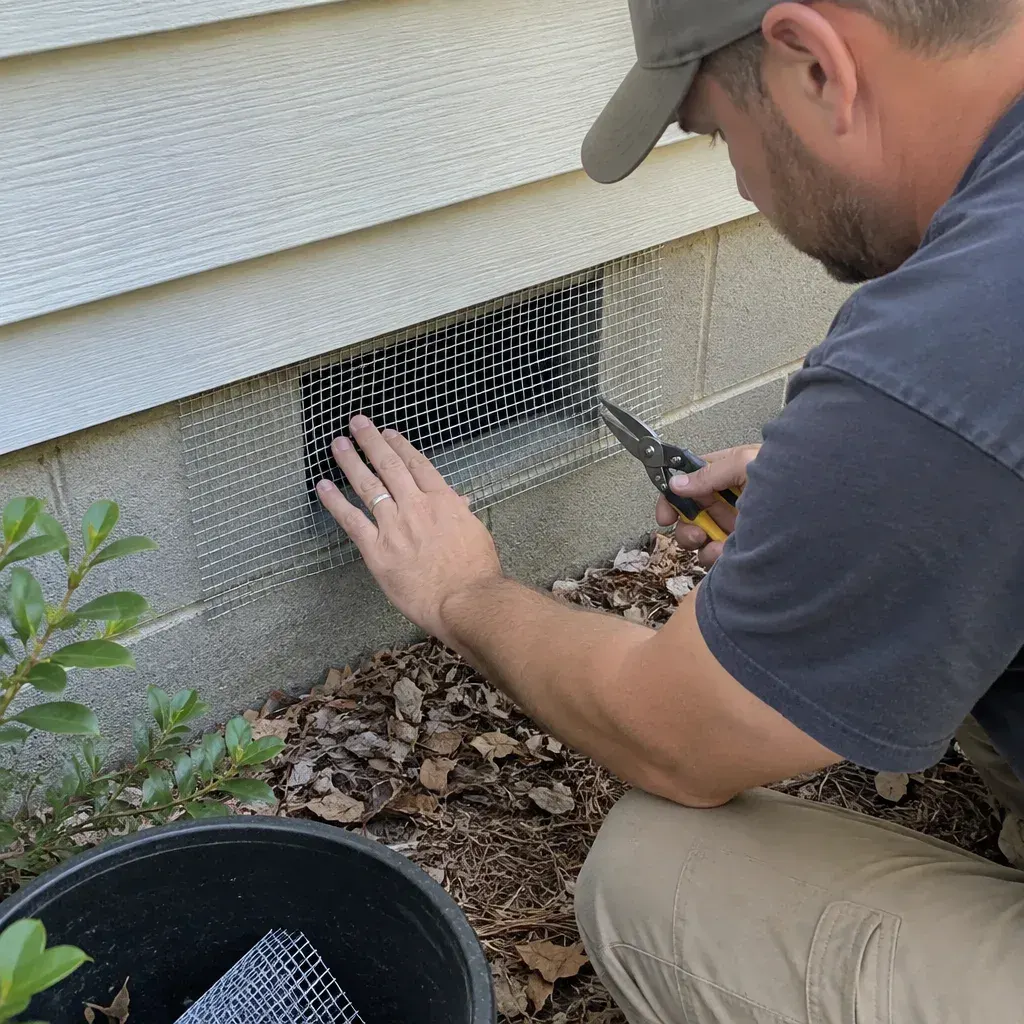
Where Kenosha Homes Can Use Hardware Cloth
Check which openings suit hardware cloth, then weigh mesh choice, fitting effort, and upkeep for a Kenosha property.
Hardware cloth can screen broad, defined openings, including foundation vents or unused exterior utility openings, when a firm border can hold the panel. Choose mesh suited to the rodents, fasten its edges securely, and preserve needed airflow or access.
Openings Suited to Hardware Cloth
Start by checking whether the opening has a firm border that can support a fitted panel. Hardware cloth is a stiff, woven wire mesh used to screen broad, defined openings, such as a damaged foundation vent or an unused exterior utility opening. In Kenosha, the opening’s dimensions and access around it help determine whether a panel is practical. A simple, reachable frame may take less work than a blocked or uneven one, so measure before choosing material or estimating the job.
Check the opening’s purpose before covering it. A basement vent needs to pass air, while another opening may need to remain reachable for inspection or service. Near Monument Square, a house or small business still needs a screen that preserves what the opening does. Hardware cloth can be cut to a panel shape, but a cover that obstructs airflow or access may create a different problem. Note these requirements when measuring so the proposed panel fits the opening’s use as well as its outline.
Hardware cloth works best where a flat panel can span a broad opening and meet a solid border. It is not a universal cover for every route into a building: a small, uneven gap or a narrow crevice calls for a different approach. At a Kenosha property near Festival Park, for example, first identify whether the concern is a large screened opening or a gap with no panel frame. Matching the material to the opening can prevent spending on a panel that cannot sit securely.
Mesh Choice and Project Cost
Choose mesh by considering which rodents the cover needs to resist and how the wire will hold up under pressure. Hardware cloth for mice needs openings small enough to restrict access, and the wire should be sturdy enough that it does not readily bend out of position. Mesh size and wire strength affect what material is suitable, and therefore can affect the amount and type of material needed. Compare those needs with the opening’s measurements before deciding what to install.
Consider exposure before settling on a finish. A panel around a damp foundation opening or an area exposed to rain may corrode over time if its material is poorly suited to the conditions. Corrosion can weaken the wire and shorten the useful life of the cover, so the surrounding surface and moisture exposure matter alongside mesh size. In Kenosha, the right selection depends on the particular opening; the town name alone does not tell you what finish that spot needs.
Measure across the opening in more than one place if its border is uneven, then allow for the panel to overlap a stable edge. A piece cut too small can leave a path around its perimeter; one cut poorly may bow or expose sharp wire. Those fit problems can add trimming and fastening work, which may change the cost of installation. Before attaching the cloth, check that its edges can lie flat without interfering with the vent or access it must preserve.
How the Cover Stays in Place
Look at the surface around the opening before planning the attachment. Screws or other fasteners cannot keep the screen in place if the frame is loose, crumbling, or cracked; movement can pull an edge away and create an opening. A sound border helps the mesh stay fixed when pressed. For a small commercial property near North Beach, as at a house elsewhere in Kenosha, the condition and reachability of that border can affect labor and whether it needs attention before the panel goes up.
Plan for how the opening will be reached after the mesh is installed. A vent may need cleaning, and an exterior service opening may need periodic access, so a permanently blocked panel can complicate routine work. Fastener type and panel placement should account for those needs while keeping the screen seated. Hard-to-reach openings or covers that must be removable can require more fitting work, so include access requirements when comparing estimates for rodent exclusion.
Checking Covers Over Time
After installation, inspect the panel and the border where it meets the building. Rust, bowed wire, loose fasteners, or a lifted edge can reduce the screen’s ability to block entry. A cover can shift as its support changes, so a sound initial fit does not remove the need to look again. If you find fresh droppings, gnaw marks, or other signs nearby, an inspection can help determine whether rodents remain active and whether the opening is part of their route.
Keep the space around a screened opening clear enough to see its edges and check that air still moves where ventilation is needed. Leaves or stored items can hide a loose corner, press against the wire, or restrict airflow. At a Kenosha home or business, occasional visual checks can reveal a problem before the panel is badly displaced. If the mesh has shifted or the frame has deteriorated, the repair may involve more than simply tightening a fastener.
Before Choosing a Mesh Cover
- Measure the opening across several points and note whether it must keep passing air or remain accessible for service.
- Check that the border is sound enough to hold fasteners and that the mesh openings and wire suit the job.
- Inspect the panel later for corrosion, bent wire, loose fasteners, lifted edges, or signs of continued activity.
- Measure the vent or opening first; a cover that reduces needed airflow or blocks routine access may need a different size or placement.
- Compare mesh openings and metal thickness with the rodent exclusion goal; finer or heavier cloth can change material needs and fitting effort.
- After fitting, look for bent mesh, corrosion, or shifted fasteners; repairs depend on the damaged area and how the cover is attached.
Rodent Service Details
Which openings around my home can hardware cloth cover?
Hardware cloth can cover a broad, defined opening with a border that can hold a panel, such as a damaged foundation vent screen or an unused exterior utility opening. The mesh must fit the opening, resist the rodents at issue, and stay attached without blocking needed airflow or access. Smaller irregular gaps may need a different sealing method. Measure the opening and inspect its frame before choosing a cover.
Does finer hardware cloth for mice cost more to fit?
A secure barrier needs a close fit around the full edge, since rodents can use gaps at the seam. A reachable, sound frame may need less preparation than a damaged or awkwardly placed one. Removable panels or requirements to preserve airflow and service access can also affect the work. Compare estimates based on the same opening and scope.
What should I inspect on an older mesh cover?
Consider an inspection if you find fresh droppings or gnaw marks, hear continued activity, or cannot tell where rodents are entering. Hardware cloth may secure a suitable broad opening, but a panel alone does not address activity elsewhere or every type of gap. The pros we connect you with can assess the signs and opening, then explain whether a fitted screen is appropriate and what other control steps may be considered.
Measure the Opening and Note Its Needs
Measure the opening and note airflow, access, and attachment points before asking the pros we connect you with about a hardware cloth cover.
Call (262) 665-0359