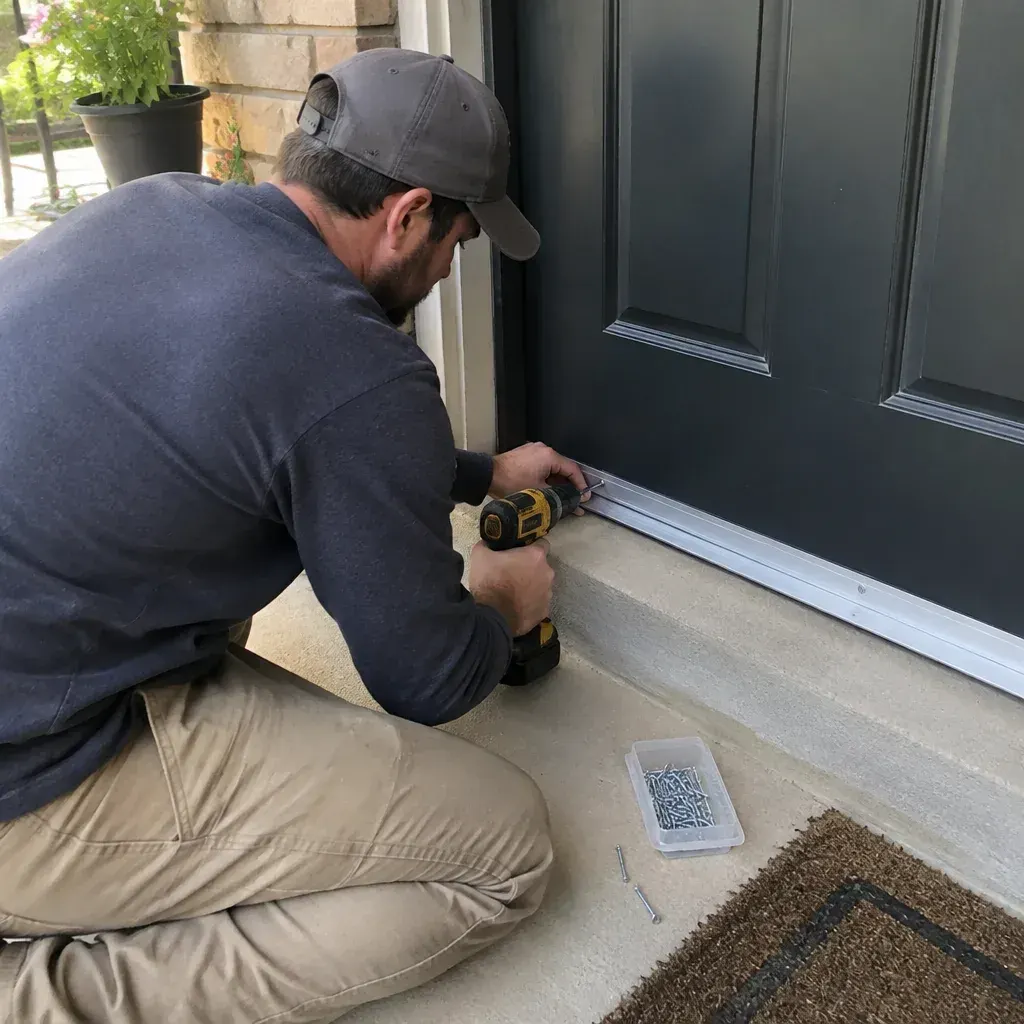
Check Door Sweeps for Rodents in Kenosha
A seasonal check of the door bottom can show whether a sweep still covers the gap without dragging.
A rodent-resistant door sweep can help reduce the opening beneath an exterior door when it fits the gap and contacts the threshold across the width. The ends matter too, since a sweep that does not reach them can leave an opening beside the door.
Start With A Seasonal Door Check
Start this season’s check with the door shut and the bottom edge in view. A rodent door sweep is a strip fixed to the door that meets the sill as the door closes, reducing the space beneath it. In Kenosha, make this check at exterior doors in both houses and small commercial properties; the door’s movement determines whether the barrier can stay in place. A sweep addresses only the bottom opening, so first note whether the visible gap runs across the width or changes along it.
Next, compare the opening at several points along the closed door with the dimensions and installation guidance for the sweep you are considering. The ends deserve attention because a strip that stops short can leave a path beside the door. For a house near Simmons Island Park or a shop near Festival Park, the same measurement check applies. Record where the space is widest before choosing a profile, and check whether the instructions allow trimming or require a particular mounting surface.
Then check clearance before fitting anything. The strip needs enough room to pass the sill as the door moves, while reaching low enough to limit the opening when closed. A product intended for a flat floor may not suit a raised threshold or a surface that changes height. Watch for contact that could catch on a mat or floor covering, too. The door should open, close, and latch normally after installation; a tight edge that holds the door open defeats the fit you are trying to achieve.
Match The Strip To Door Movement
After measuring, inspect the existing strip for damage before cold weather makes a small defect easier to overlook. Look for a torn contact edge, a split in the material, or a section that has shifted out of line. Those changes can interrupt the barrier even when most of the sweep looks intact. In Kenosha, seasonal checks are useful on frequently used house entrances and small business doors alike. Note the affected area and whether the strip still meets the sill when the door is shut.
Check the mounting next. Screws or other fasteners can loosen as a door is used, allowing the sweep to sag or move sideways; the material may also harden or curl with age and exposure. A door sweep rats might encounter is only useful as a barrier where its edge remains in place across the opening. If the strip shifts during ordinary use, inspect its attachment points and follow the product’s fitting directions before deciding whether the existing piece can be secured or needs replacement.
Now examine how the threshold meets the door from end to end. A worn sill, a slight slope, or a high spot can change the contact: one section may press down while another leaves daylight. That variation matters even when the sweep itself is straight. Close the door and look from a low angle, then compare the gaps at both ends and the middle. If contact differs, note the threshold shape before selecting another strip; a different sweep cannot correct every uneven surface.
Look For Wear And Floor Changes
As the season turns colder, clear ordinary debris from the sill before judging the fit. Leaves, grit, or slush can collect where the door meets the threshold and keep it from closing fully. In a Kenosha house or storefront, repeat the check after the entrance has been used in wet or snowy conditions. See whether the door settles into its usual closed position and whether the sweep returns to contact along the sill. This helps separate a temporary obstruction from a worn or poorly aligned strip.
Finally, check the rest of the closed doorway without widening this sweep’s job. The strip covers the lower edge only; it cannot cover a space above its contact line or along the sides of the door. If you see light elsewhere, record that location separately rather than expecting a longer bottom strip to solve it. A sweep can reduce one possible route while other openings remain. Keep the observation specific to the doorway, whether it is at a home near Monument Square or a small business elsewhere in Kenosha.
Know What The Sweep Covers
Finish with a full open-and-close check. Watch whether the sweep stays attached, passes the threshold without catching, and leaves the door able to latch. Then inspect the closed edge again to see whether the strip contacts the sill across its length. These checks show how the parts behave together after fitting; a measurement alone cannot show whether the door binds in motion. If the result changes as the door moves, note where contact is lost or resistance begins before adjusting the setup.
For a seasonal record, write down the door location, the widest part of the bottom gap, the threshold shape, and any wear or movement you noticed. Include whether the sweep affects opening or latching. In Kenosha, you can use the same notes for a house near the Dinosaur Discovery Museum or a small commercial entrance near North Beach; the useful details are about that specific door. If you ask the pros we connect you with about rodent exclusion, these observations help explain what the sweep can address and what its fit depends on.
Checks Before Choosing A Sweep
- With the door closed, compare the bottom gap at both ends and the center; note where the sweep misses the sill.
- Check the product’s fitting guidance against your measured gap, threshold shape, and door clearance before installation.
- After fitting, operate the door and look for a shifted strip, catching edge, or latch that no longer engages.
- Check that the door still latches and swings freely after the sweep is fitted; contact that binds can interfere with normal closing.
- Look at both ends of the closed sweep for uncovered corners, where the strip may fall short of the door’s full width.
- Note cracking, splitting, or a loose mounting edge; worn material can lift away and reopen the space below the door.
Rodent Service Details
Should a door sweep touch the floor when closed?
Yes. A properly sized, securely attached sweep can narrow the opening beneath an exterior door when the door is shut. Check contact across the full width and make sure the door still opens and latches freely. Its barrier is limited to the bottom edge; it does not close gaps elsewhere around the doorway, and fit depends on the threshold and floor.
When should I check my exterior door sweep?
Close the door and compare the sweep’s contact with the sill from one end to the other. A dip, worn spot, or sloped threshold can leave space below part of the strip. Check the door in its normal closed position, since a strip that looks aligned while open may sit differently against the threshold once shut.
Can I use a rodent-resistant sweep on a shop door?
Inspect the strip for a split, curled edge, loose fastener, or section that no longer stays aligned. Then operate the door and check whether the sweep moves or catches. If damage or shifting leaves a portion of the sill uncovered, compare replacement options with the doorway’s measured gap and the product’s clearance guidance.
Ask About The Door’s Sweep Fit
Describe the door, threshold, and visible gap, then ask the pros we connect you with what sweep fit and installation work may involve.
Call (262) 665-0359